
The challenge
A collegiate community room needed to support everyday meetings, presentations, mobile-cart operation, advanced AV-over-IP routing, eighteen audio inputs, multiple output zones, projection and screen power, and a serviceable device fleet. Putting every capability on one screen would have made the system intimidating and fragile.
The operating model
CityMind separated the system into three deliberate experiences: a clear primary room interface, a limited mobile-cart interface, and a protected administrative/service interface. Each user sees the decisions appropriate to their role while all three experiences share the same underlying system state.
What CityMind delivered
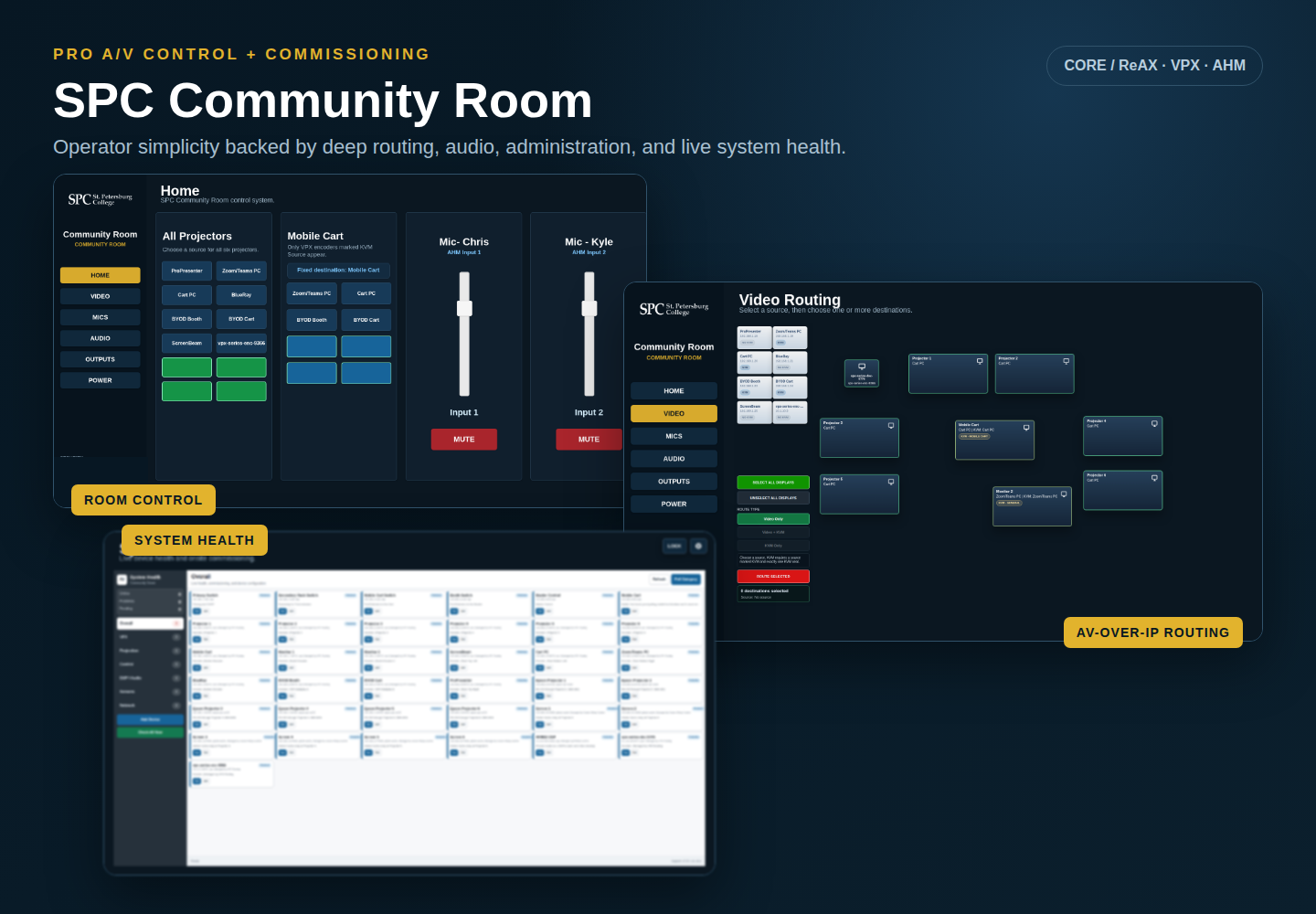
- Home, video, microphone, audio, output, and power workflows
- Room-map VPX routing with video and KVM role awareness
- AHM DSP control across microphone, program, and output banks
- Mobile-cart routing and audio controls adapted to a smaller panel
- Two-level administrative security and editable configuration
- Reusable control modules for routing, projection, screens, audio, and assignable controls
- Live health, commissioning, and device-testing views across the AV and network fleet
- A twenty-page user and administrator guide made from the final runtime
The result
The room feels straightforward to its operators without becoming opaque to technicians. Everyday actions remain prominent, advanced routing stays available when needed, and the service team can inspect and test the infrastructure through a dedicated health layer. The project shows how interface design, reusable programming, commissioning discipline, and documentation work together as one delivery system.